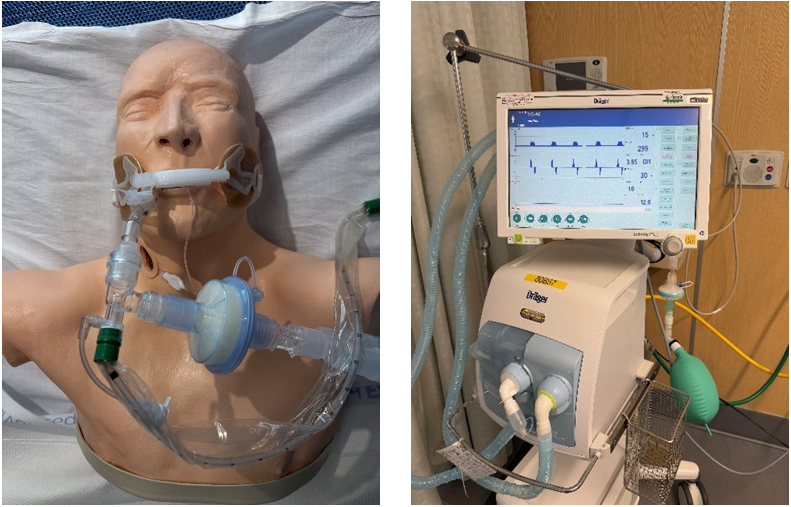
About Ventilators

Having a loved one in the ICU can be a stressful time but knowing more about the machines that are helping your loved one can help. Watch the video to learn more about ventilators and to hear the different sounds it can make.

What is a ventilator?

A ventilator is a machine that helps someone breathe when their lungs are very sick or injured.

A breathing tube called an endotracheal (ET) tube is placed through the mouth and into the windpipe (trachea). This tube connects the lungs to the ventilator.


How does a ventilator work?

  • The ventilator pushes air with oxygen through the breathing tube directly into the lungs, helping to push carbon dioxide out.
  • It has a screen and alarms that we watch closely to adjust how much air, pressure, and oxygen is needed.

How long will my loved one need to be on a ventilator?

We will take out your loved one’s breathing tube as soon as they are ready. This is because the longer they are on a ventilator, the higher their risk of getting an infection.

Each day, we will check to see if your loved one is ready to start breathing on their own through a process called a spontaneous breathing trial (SBT) or CPAP trial. These are short tests that help us see how well your loved one can breathe without full help from the ventilator.

Before starting the trial, we think about:

 Why the breathing tube was needed.
 How much oxygen and breathing support the ventilator is giving.
 Your loved one's strength, sleepiness or sedation, and overall stability.

If your loved one does well, we can remove the breathing tube. This is called extubation.

If the tube needs to stay in for more than 14 days (2 weeks), we will talk with you about other options for long-term breathing support, like a tracheostomy. 

How do we keep your loved one comfortable?

Breathing tubes are not comfortable because they are made of plastic and sit in the airway. To keep your loved one comfortable and calm, you care team may give medicines for pain and anxiety. 

Our goal is to give the least amount of sedating medication (medication that makes you sleepy) as possible.

Can my loved one talk or eat with the breathing tube in?

While the tube is in place, your loved one will not be able to talk because the tube goes through the vocal cords. They also cannot eat or drink because the tube has a balloon (cuff) that seals the airway, so the air goes into the lungs and not into the stomach. Food and liquids are given through feeding tubes or IV fluids.