About Tracheostomies

Having a loved one in the ICU can be a stressful time but knowing more about the machines that are helping your loved one can help. Watch the video to learn more about tracheostomies and to see how we help care for them.

What is a tracheostomy?

A tracheostomy is a small surgical opening through the front of your loved one's neck and into their windpipe (trachea). A tracheostomy tube is placed through this opening to help your loved one breathe.
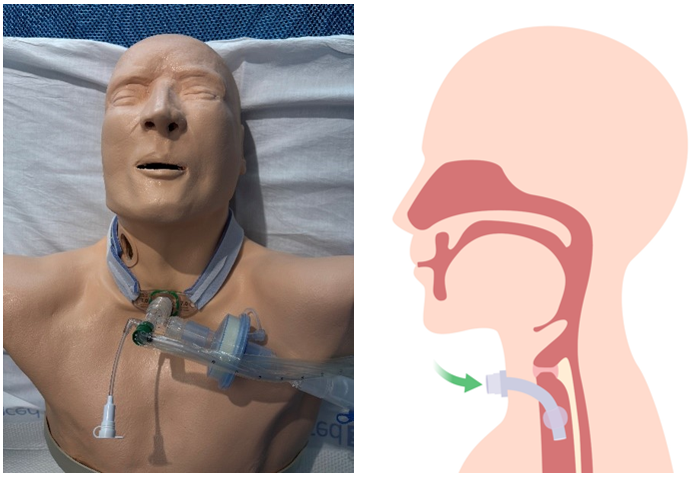
A tracheostomy is also called a trach (pronounced "trayk"). 

A trach may be needed if your loved one:

  • Needs a ventilator for a long time.
  • Has trouble breathing through their nose or mouth.
  • Has swelling, injury, or a blockage in their upper airway.
  • Needs help clearing mucus or secretions from the lungs.

A trach can also make breathing more comfortable and safer for people who are very sick.

How does a tracheostomy work?

Instead of air going in and out through the nose or mouth, air moves through the tracheostomy tube (trach tube) directly into the lungs.

For most ICU patients, we attach the trach tube to the ventilator. The trach tube has a small balloon called a cuff that seals the airway so that air doesn't leak out while attached to the ventilator.

How long will my loved one need a tracheostomy?

It depends on why the trach was placed. Some people need it for just a few days or weeks. Others may need it longer, or even permanently, depending on their medical condition.

At first, your loved one may need full breathing support from the ventilator. As they get stronger and recover, we will slowly lower the amount of help from the ventilator.

Our team of respiratory therapists, nurses, and doctors will guide you through each step:

  1. Spontaneous breathing trials: when your loved one practices breathing on their own.
  2. Trach collaring: when your loved one spends time breathing through the trach without the ventilator.
  3. Weaning: when your loved one works toward breathing room air completely on their own.

This process takes time and is adjusted carefully for each patient's needs and progress. When your loved one no longer needs it, the trach can usually be removed and the opening will slowly close on its own.

Can you talk with a tracheostomy?

Sometimes, but it depends on how much breathing support is needed.

  • If the cuff is inflated, air can't pass through the vocal cords, so your loved one cannot talk.
  • If the cuff is deflated and your loved one is medically stable, they may be able to talk by covering the trach with a finger or using a speaking valve (a small device placed on the trach).

A speech-language pathologist (SLP) will check whether it's safe to try these options. If speaking isn't possible yet, your loved one may use communication boards or electronic devices to help communicate.

Can you eat with a tracheostomy?

Maybe, but this depends on how safely your loved one can swallow. Many people with a trach also have difficulty swallowing (called dysphagia). This can cause food or liquids to go into the lungs (called aspiration), which can lead to pneumonia. 

A speech-language pathologist will test their swallowing and decide if your loved one can safely eat or drink by mouth. If not, they may receive nutrition through a feeding tube like an:

  • NG tube (through the nose)
  • PEG tube (a feeding tube into the stomach)

Can you go home with a tracheostomy?

Yes. Many people with trachs go home safely with help from:

  • Trained family or caregivers
  • Home health nurses
  • Respiratory therapists

Before going home, we will give you all the education, training, and support you need to care for the trach.

If your loved one still depends on a ventilator, they may need to stay in a facility where breathing support and oxygen are available.

What are the risks and benefits of a tracheostomy?

Benefits

  • Makes breathing easier and more comfortable for some patients.
  • Allows for long-term ventilator support if needed.
  • Helps clear mucus or secretions from the lungs.
  • More comfortable than a breathing tube in the mouth.

Risks

  • Infection where the tube enters.
  • Bleeding or irritation.
  • Mucus blocking the tube.
  • Trouble speaking or swallowing (temporary or long-term).
  • Pneumonia.

We will closely watch the trach to lower these risks as much as possible.